aarn_wrks_dsn


[ WEBSTORE!!!!!!!!!! ]

These are some of my collaborations/projects as an engineer/consultant/ designer. I'll try to share what I can of my contract work, and keep a log of my side projects/crafts for people to follow, if they are so inclined. Grab the RSS or Follow Me On Tumblr to stay up to date.

My food blog is Here.

I live in Somerville Massachusetts, and work at Fringe.

-aarn

Inquiries to:
aarnwrksdsn [at] gmail

Twitter:


Facebook:

tomii/aarn: available now: tomii + 44rn 1x 130#44 road chainring [bicycle]

image

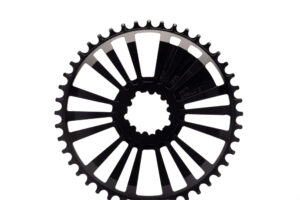
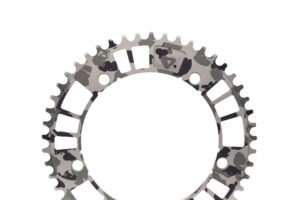
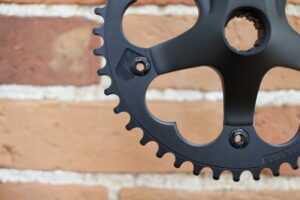
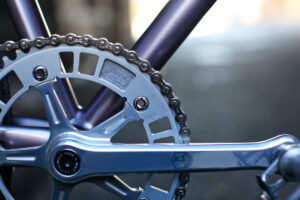
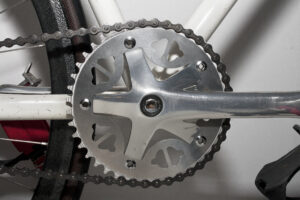
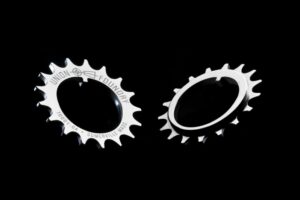
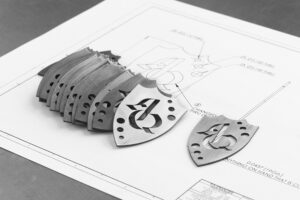
The idea for this chainring started so long ago that I can’t even remember when it was. Nao Tomii was having a hard time getting his machine shop, for the now retired 3RRR product line, to make some necessary changes to the tooth profile that he had been using for his track chainrings. He came to me with a sketch of this chainring that made hearts with the spider pattern of the crank arms. Originally it was a track ring (144BCD), then it was a track-style ring that fit onto a road crankset (130BCD), then finally it ended up as a one-by-n road ring (3/32”) in 130mm BCD and 44 teeth. This happened over a period of three or four years, we even made some prototypes in each style over the years.

There are a few elements of the design of this ring that I think are interesting…After Nao passed the rough sketch to me, I wanted to add some features that were consistent with the overall idea of the ring, so I incorporated the heart cut-out around one of the chainring bolts, and a variable radius blend on the inside of the heart shape to soften that feature. I also thought that it would look sharp if the teeth of the ring blended into the nameplate. I wanted to avoid having gunk build up at the seat where the teeth meet the ring body, so instead of putting a sharp corner there, the detail is milled out with a ball endmill. 

image

Another unique aspect of this chainring is the application. A lot of people (myself included) have bicycles that run a single ring up front with a multi speed cassette in the back. The idea of making a tooth profile that is not designed for shifting, but is designed for tighter engagement with the chain when used with up to a ten speed cassette in the rear, was intriguing to me. I took some liberties with the design, and the prototype got good reviews during the field test. The ring will work with a chain catcher/keeper like the Paul Components version, and fits snugly on all of the cranks tested. 

image

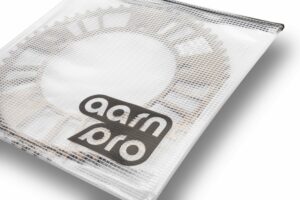
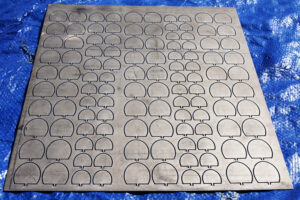
These chainrings are a little more expensive to make than the track ring that I have previously released, just because of how much machining is required to make each, so the price reflects that increase. Manufactured in Peabody, Massachusetts, USA, from certified 6061-T6 aluminum plate stock. These chainrings are fully CNC machined. All edges (front and rear) are machine broken with a 45-degree 0.010-in deep chamfer. Product is packaged in brown paper with a QC certification label and number, and shipped USPS Priority Mail.

image

The price is $88 + S&H, there are 50 rings total available (26 Black and 24 Clear/Silver). Get it here.

[Photos: Nao Tomii]

++

available now: limited edition cuppow in color! [product]

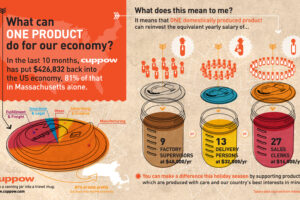
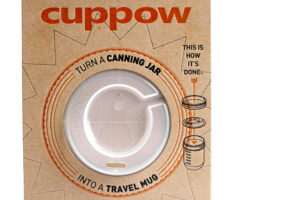
Full press release is located here. Available at Cuppow.com. Click “Buy Now” for details about our product line.

++

available now: 44rn 144#47 chainrings [bicycle]


In black and silver exclusively on Prolly Is Not Probably. Limited quantity available.

++

geekhouse/aarn: road/cx dropouts for geekhouse bikes [bicycles]


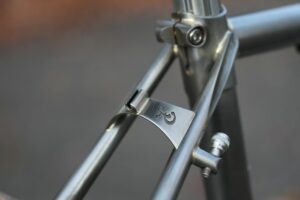
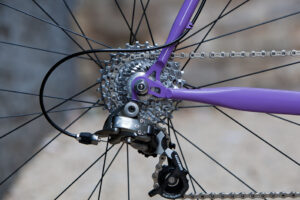
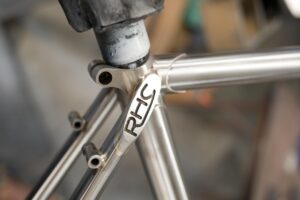
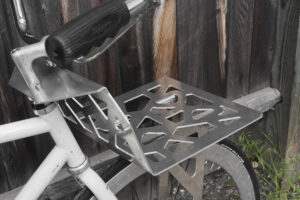
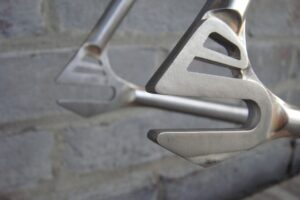
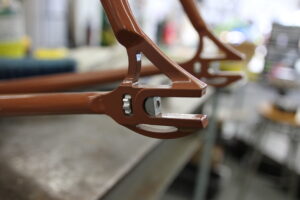
The 2012 batch of Geekhouse Bikes CX frames feature a new custom dropout design that I have been working on for Marty since the spring. My goal with this design was to create a modern-looking dropout with very clean lines, to compliment the TIG welding process, and be consistent with the family of previous design work that I have contributed to Geekhouse.

I spent a lot of time trying to figure out how to tastefully use layering of material thicknesses in a single part to create a visually more complex structure, without making the dropout look too techy. Overall, I am happy with how these turned out. At first glance, the dropouts look very plain, but there are a lot of subtle details in them. I think that the blends and surfaces in the final machined parts look nice and simple, and Richard Defrancisco, at Cantabrigian Mechanics, did a great job machining them.

Marty and I are going to do some updates to the design after we get some feedback from the first batch, before these go onto regular production frames.

[Photo #1: John Watson, Photo #3: Geekhouse Bikes]

++

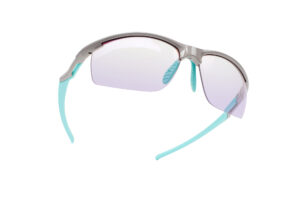
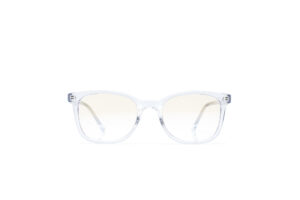
aarn: e2 47.18 sunglasses [eyewear]

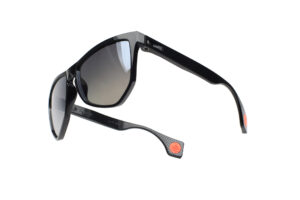
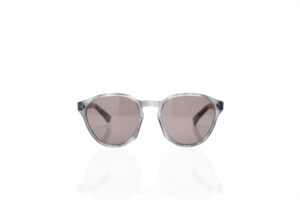
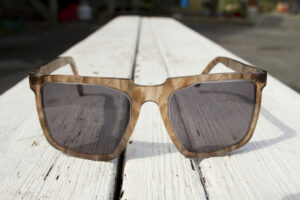
Numbering systems are way more timeless than names, but if I had to name this frame, it would be called “The Worrier” or “Elton John John John.” Now that that’s out of the way, let’s talk about the numbers, “e2” because this is the second pair of eyeglass frames that I have designed and fabricated, and “47.18” because that is the size of these frames.

With eyewear, scale is a particularly difficult thing to judge, especially because the glasses need to fit some pretty complex and diverse facial geometry. The completion of these frames has brought me technically much closer to where I want to be with the process of designing and fabricating eyewear, but the fit part is going to take me a while.

This pair took me about 20-hrs to make, spread out over three days. It started with a sheet of NOS Mazzucchelli Tectonic tortoise shell cellulose acetate (probably from the 70s), laminated in the nose pad region and CNC milled for the rough form. The frame was then hand filed for appropriate contours, grooved for lenses, fit and drilled for hinges, riveted, filed again, glazed, heat formed, de-glazed, wet sanded, polished, assembled, polished, re-glazed, temples formed, and then washed.

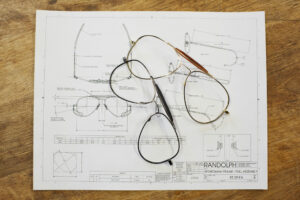
I compiled some of my initial sketches and notes since the last frame into a nice collage, which shows part of what had to happen on the back end before anything was modeled or any cutting occurred. Stay tuned for another pair in a month or so.

Photos (Big thanks to Andrew for being my fashion model)

++

luxe/aarn: luxe wheelworks custom skewer replacement lever [bicycle]

Sometimes when working on a project you have to give up on an idea with which you fell in love. Partly as a jab, and partly because it was perfect, I pitched the idea to Justin Spinelli, of Luxe Wheelworks, for a design that incorporated the setting of a Swarovski crystal into the skewer lever for his custom built wheels. How Luxe would that have been?

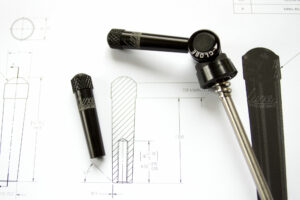
Anyway, after a few changes we came up with the current version, which just came back from the shop. This lever is swiss milled out of 6061 aluminum, then anodized black, and then laser etched with the Luxe logo on both sides.

The lever replaces the stock plastic lever on the Joy Tech skewer system. Rims for your rims. Available on Luxe Wheelworks stock in-house builds soon.

Photos.


++

aarn: frame builder: teaser [eyewear]

This post details not a specific project, but one of the most important decisions that I have made recently concerning direction, work, and process. About two years ago I started working with a local eyewear company to help them develop a new production frame. I tried hard to learn everything that I could about the process, but at the end of the project I had a lot of questions. For the last year or so since that project ended, I have found myself more and more interested in this industry, perhaps because there is so little information about process and because manufacturing techniques are so guarded. A few months ago, I decided to take the plunge and start to assemble a better working knowledge of the process of designing and fabricating glasses frames, more specifically cellulose acetate plastic frames.

I’m not trying to specialize into this industry, but by acquiring a “strip-built canoe” or “ship in a bottle” type project, I will attempt to be more connected to the process of refining an art/skill instead of working on projects solely towards the goal of completion. I am not going to stop designing other devices and products, but this project will hopefully be in the background, slowly maturing. This is the first pair of sunglasses that I have designed and made from scratch. The frame is made from vintage Mazzuchelli tortoise shell acetate, and the lenses are custom cut plano 6-base CR-39 plastic.

I have read that there are something like forty-two steps in manufacturing a hand-made pair of acetate glasses frames, I think that I have figured about two of these steps out so far. I have a long way to go on this one, but each new detail is exciting. Stay tuned for updates on this project, I should have time to knock another pair out in 2015 or so.

++

aarn: cuppow regular with straw-tek advertisement campaign [product]

I directed, shot, and edited these three spreads as a part of the online ad campaign for the new Cuppow Regular with Straw-Tek product release. Illustrator Natalya Zahn did some additional edits and sketched some of the graphic elements of the product packaging over the photos.

++

aarn: available now: cuppow regular with straw-tek [product]


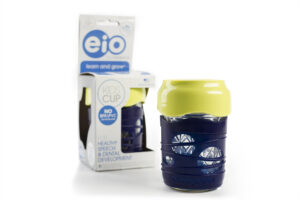
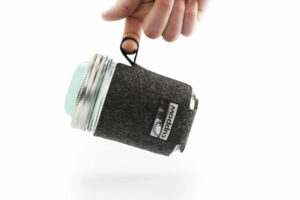
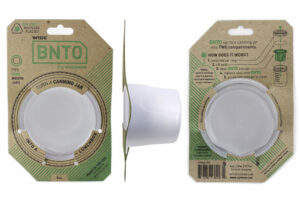
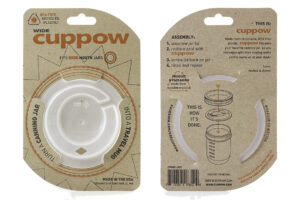
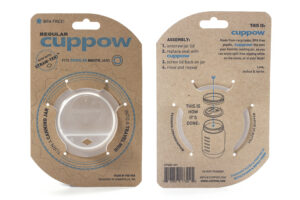
Joshua and I introduced the second member of the Cuppow family earlier this month, with the birth of Cuppow Regular with Straw-Tek. Cuppow Regular fits on regular mouth canning jars while Cuppow Wide (what we are calling the original Cuppow now) fits only wide mouth canning jars. In an attempt to keep this product different from the Cuppow Wide, we approached the product with a different form in mind. Also, we added a diamond shaped spout opening—which we were jokingly calling “Straw-Tek” during development—to allow for a variety of flexible straw sizes to be retained (from small to the garden hose that McDonalds offers) if you should choose to use a straw instead of just sipping from the spout.

I guess that the whole Straw-Tek naming thing was kind of funny until we trademarked it and put it on the packaging.  It was the perfect name and allowed us to highlight a significant feature of the product which would have otherwise gone unnoticed. A major reason for adding straw compatibility was to appeal to the smoothie and cocktail user base, since regular mouth sized canning jars will thread directly onto the blade base of most household blenders, and also to further separate our two products. Visual separation of the two products was very important to us because, for the most part, the only people who can tell the two sizes of canning jars apart (wide vs regular mouth) are the two of us, and avid canners, however; our market is much less specialized than that and we needed each product to have its own identity.

Right around the time of this product release I wrote a case study in collaboration with Raymond Hu for Core77 about the process of wrapping up a six month development cycle of the two Cuppow products and about our focus on a local supply chain. There will be a follow up post on the process of designing new packaging for both Cuppow products in the next month or so.

++

aarn: “prolly purple” 144#47 raidô contest [bicycle]

Prolly Is Not Probably is doing a contest to promote a new category of content on his site devoted to photography (and maybe stories?) depicting cycling as a more spiritual/emotional journey. It’s a mature direction for John’s blog and we can definitely expect to see a new angle of well-developed content from him.

I sent John down three of these “Prolly Purple” anodized 144#47 chain rings a few weeks ago, and the winner of the contest will get one. Only three were made, only one is getting released to the public. Depending on the rest of your build these could just scream 1990-something, or be super classy.

[photos: Prolly]

++

aarn: available now: cuppow [product]

It was probably right around the beginning of spring last year when my friend Joshua Resnikoff said that he wanted to talk to me about an idea that he and his wife Christine had been bouncing around. Resnikoff, who was/is finishing his masters of science in biomedical engineering at Tufts, wanted to make a to-go cup lid for a mason jar. At first I thought that it was a dumb idea, but the more I thought about it, the less dumb it sounded (and now I don’t think that it is dumb at all!). I did a little research and came up with a potentially novel retention and closure technique. I designed a version that was made from stainless steel and hydroformed from a disc of sheet stock.
We then realized that due to the temperature issue with the stainless and potentially hot liquids inside of the jar, that plastic would be better. I did a rough plastic design, and a few months later we had an SLA prototype made. I kept tweaking the design, but nothing too ambitious happened again on the project until we stumbled upon an amazing intellectual property lawyer named Noah Sachs. Once a lawyer was on-board things really started to move…that was about a month ago.

We put together an awesome team of designers and creatives, all of whom work with/near me at Fringe. After the plastic design was finalized and material was selected, Natalya Zahn (who works about 20 feet behind me and 2 feet to the right) designed some amazing packaging graphics based on the geometry of a custom die that I had brainstormed together with Mike Dacey (of Repeat Press, 10 feet to the right of my desk). Once the packaging graphics were done, those were passed 100 feet down the hall to Mike Kivikoski (from Atedrake) who designed a website around the aesthetics and color palette of the packaging.
Once the custom die for cutting the packaging and the printing plates arrived, Mike Dacey printed and cut the packaging in his letterpress shop (15 feet to the right of his desk). Then Stebs Shinnerer (of Paper Fortress Films) got involved and shot and edited a promo video in one day (10 feet behind my desk), and we finished up with a photo shoot in New Black Studio (10 feet behind Stebs’ desk). These people are amazing. I could not be happier with the completed product.  Check out the website and buy a Cuppow for only $7.99!
[edit] Here’s the promo video!
++

fringe: now open: process by fringe [retail]

We over at Fringe in Somerville, Massachusetts, have a pop-up shop/retail experiment going on over at Grand at 374 Somerville Avenue. Jon and Wendy from Grand were kind enough to rent us half of their space for the entire month of January…so we set up shop. 

The space is arranged with a little spot for everyone from Fringe who wanted to be involved. It’s kind of a hybrid gallery-store. 

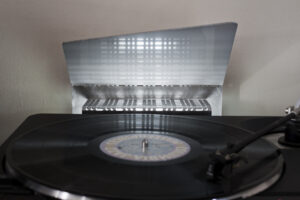
I have a little table with a bunch of stuff on it, including the tab desk lamp, the turntable bounce light, t0001, and some chainrings, along with some sketches and process pieces or prototypes of each. 

Check it out if you are in the area. Also, Fringe has a tumblr now, so make sure to follow fringeunion.tumblr.com

++

aarn: tab desk lamp [furn]

For over two years I have been making sketches and designing a series of furnishings. As my interests and experiences expand, the designs have been becoming more complicated and their manufacturing has come to involve a greater number of processes.

Limiting myself more-or-less to the processes/capabilities available in my slowly growing office shop has allowed me to pick a few materials and processes and/or techniques that I am really into, and refocus my designs around them. The drawback of this approach is that it is possible to easily design beyond your capabilities (when you are planning to do all of the manufacturing/fabrication yourself).
The Tab Desk Lamp is a project that I created for myself almost exactly two weeks ago as an opportunity to try out a few new techniques without the risk of wasting money on materials, or encountering failure on some of the more complicated projects that I have been planning. Also, in acting as my own shop, I created manufacturing drawings for each part, and directly followed them during fabrication.
 

I have wanted to cut glass with a waterjet machine ever since I learned that it was possible. Originally, I had a sheet of 0.150-in thick tempered glass laying around that I wanted to use…ends up that tempered glass explodes as soon as the pressurized beam of water touches it. I found a place that sold me “used” 0.375-in thick plate glass as a replacement. (Thanks to my friend Steve for the waterjet parts)
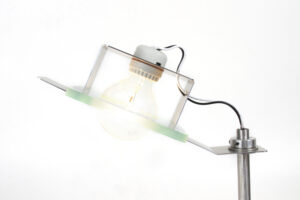
The formed aluminum bulb frame tabs through the glass, and a raw porcelain panel-mount light socket is attached through a hole in the sheet metal. When the bulb is installed, it locks the glass in place. This fixture was designed around the exact geometry of this 25-watt globe light bulb. The glass plane is centered around the origin of the bulb sphere, which I thought would allow for the most light to be piped through the plate glass - and look cool.
 
The upright of the lamp is ⅝-in OD stainless steel tubing, bent to 110-degrees - which creates a vertical upright when mounted to the adjacent leg of the right-triangle sheet metal formation base. At the top of the upright, where the bulb frame attaches, a stainless steel fixturing washer was TIG welded onto the tubing. The bulb frame is sandwiched between the stationary welded washer, and a loose washer, and clamped in place with a shaft collar. The bulb frame can rotate around the upright about 20-degrees in either direction before the balance of the light is compromised. I made parts for two of these lamps, but I have no plans for offering them to the public at this point. Big thanks to Stebs for editing my sloppy process footage together into something awesome, and letting me use the gear at New Black Studio for the photos. Media for this project is here.

++

MWM graphics/aarn: 3d numerically controlled drawings [misc]

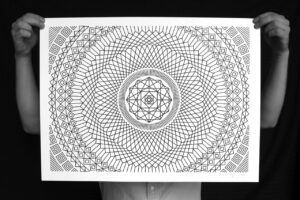
After I had completed the black and white Sharpie drawings for the Numerically Controlled Poster Series with artist Matt W. Moore, released over the summer [see MWM graphics/aarn: numerically controlled drawing series [misc]], I decided to do some experiments with some colors. I had one fresh red Sharpie and one blue on hand. I did one pass with a red marker at 100%, and then a second pass where I scaled down the blue layer to 98% and centered the transformation around the center vertex in the artwork. 

When Matt came to pick up the other drawings, I gave him TWO of these 3d drawings. He released them on Black Friday, and they are for sale in his online store along with the remaining black and white drawings from the original release. Scoop them up.

[photos: mwmgraphics]

++

aarn: pre-order now: 144#47 track chainring reissue [bicycle]

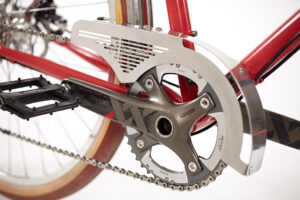
I’m doing a reissue of the track bicycle chainring that I released back in September (see aarn: available now: 144#47 track chainring [bicycle]). The response was really great, and I sold out of the fifty that I had made in just over a week! This time, I have teamed up with Prolly Is Not Probably for an exclusive pre-order through his website. I will only make as many of these as people order, so if you want one get to the PiNP store during this pre-order period. The pre-order will only last through next Wednesday or so (November 16, 2011). It is likely that I will not do another run of these. Specifics of this ring are identical to the first release: 144BCD, 47-Tooth, for 1/8” Chain, Black/Silver Anodized 6061-T6. I have optimized a few of the dimensions, but it’s nothing that most people will notice. If you are curious how the chainring looks on your make/model of crankset, check out this flickr set that I put together with some photos from people riding them.

Thanks again to John for putting this reissue together (and taking the sweet photo: top). 

[EDIT] I had to order more pieces than the pre-orders that I got, so I moved the pre-orders over to my sales page. Rings will ship the week of 12/12, the order is currently in production (noted 11/30). 

++